Entrepreneur & Mentor


Module four - Growth mindset vs Fixed mindset
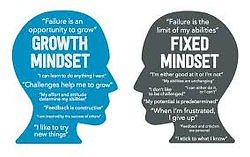
Someone with a growth mindset views intelligence, abilities, and talents as learnable and capable of improvement through effort. On the other hand, someone with a fixed mindset views those same traits as inherently stable and unchangeable over time.
For example, as an aspiring entrepreneur, you need basic finance skills to create your business’s budget and prepare its financial statements. If you have a fixed mindset, you may think, “I’ve never been good with math, let alone financial statements. I’m not cut out to run my own business.”
Now imagine you approach the situation with a growth mindset. You might think, “I don’t have a background in finance, but I can learn and practice those skills until I feel capable.”
When you have a growth mindset, you believe you can gain the knowledge and skills necessary to succeed, which makes every challenge a learning opportunity. Given the numerous challenges entrepreneurs face, a growth mindset can be a powerful tool as you work toward your venture’s success.

4 Reasons entrepreneurs need a growth mindset
While a growth mindset can benefit anyone, it’s crucial for entrepreneurs. Here are four ways a growth mindset can serve you as you launch and grow your business.

1. It allows you to move into new fields
When you have a growth mindset, your past doesn’t define your future. This can be an asset if you have expertise and experience in another field and want to pursue entrepreneurship. You need to find ways to equip yourself with the skills necessary to sustain your business. You’re investing in your own success.

2. It fosters resilience
Resilience—the capacity to recover from and move through difficult situations—is critical in the entrepreneurial world. When challenges, setbacks, and failures inevitably arise, your business’s survival depends on your ability to persevere and learn from difficult situations.
In one of Carol Dweck’s studies, her team analysed students’ brain activity while reviewing mistakes they made on a test. Those with a fixed mindset showed no brain activity when reviewing the mistakes, whereas the brains of those with a growth mindset showed processing activity as mistakes were being reviewed.
A fixed mindset can physically prevent you from learning from mistakes, while a growth mindset can empower you to perceive mistakes as learning opportunities.

3. It enables you to iterate on your product
It’s most productive to think of entrepreneurship as an iterative process—a way of managing that involves continually searching for a winning combination of opportunities and resources.
This continual process of testing an idea, learning from the results, and reiterating the product is only possible with a growth mindset.
An entrepreneur with a fixed mindset is likely to view negative feedback as a sign they don’t have the ability to make a valuable product. This can result in avoiding feedback for fear of rejection, untested products and bad product-market fit, or giving up on a venture altogether.
An entrepreneur with a growth mindset, on the other hand, receives negative feedback and constructive criticism and uses it to improve their product offering. With a growth mindset, uncovering your product’s weaknesses doesn’t translate to an inability to create a valuable product. Rather, it enables you to create the best version of it for your target market.

4. It keeps you humble
Finally, a growth mindset constantly reminds you that there’s always more to learn. By knowing you have the capacity to improve, a growth mindset can keep you humble throughout your entrepreneurial journey.
This can be especially useful in combatting stagnation. People’s needs, attitudes, and motivations change over time, so periodically reassess your product-market fit. If you get too comfortable with your initial knowledge, you could miss opportunities to grow with your target audience and meet their needs as they arise.
Here are some Fixed and Growth Mindset examples:


Mindset Formation
So how is your mindset created in the first place? Carol Dweck's research reveals two primary sources: praising and labelling, both of which occur in early childhood.
In a landmark series of experiments, Dweck and her colleagues found that kids behaved very differently depending on the type of praise they received. They found that personal praise, or praising a child’s talents or labelling them as “smart," promotes a fixed mindset. It sends a message to a child that they either have an ability or they don't, and that there is nothing they can do to change that fact.
Process praise, on the other hand, emphasizes the effort a person puts in to accomplish a task. It implies their success is due to the effort and the strategy they used, both of which they can control and improve over time.
Here’s an example of how they’re different. If your child gets a good grade on a math test, personal praise might be, “See, you are good at math. You got an A on your test.” Process praise, on the other hand, might sound like this: “I’m impressed by how hard you studied for your math test. You read the material over several times, asked your teacher to help you figure out the tricky problems, and tested yourself on it. That really worked!”

The Impact of Mindset
Your mindset plays a critical role in how you cope with life’s challenges. When a child has a growth mindset, they tend to have a hunger for learning and a desire to work hard and discover new things. This often translates into academic achievement.
As adults, these same people are more likely to persevere in the face of setbacks. Instead of throwing in the towel, adults with a growth mindset view it as an opportunity to learn and grow. On the other hand, those with fixed mindsets are more likely to give up in the face of challenging circumstances.
In her book "Mindset: The New Psychology of Success," Dweck writes that those with fixed mindsets are constantly seeking the validation to prove their worth not just to others, but also to themselves

What Is My Mindset?
Do you have a fixed or growth mindset? To find out, start by reading the following statements and decide which ones you agree with most:
1. You're born with a certain amount of intelligence and it isn't something that can be changed.
2. No matter who you are, there isn't much you can do to improve your basic abilities and personality.
3. People are capable of changing who they are.
4. You can learn new things and improve your intelligence.
5. People either have particular talents, or they don't. You can't just acquire talent for things like music, writing, art, or athletics.
6. Studying, working hard, and practising new skills are all ways to develop new talents and abilities.
If you tend to agree most with statements 1, 2, and 5, then you probably have a more fixed mindset. If you agree most with statements 3, and 4, 6, however, then you probably tend to have a growth mindset.
How to Unfix a Fixed Mindset
While people with a fixed mindset might not agree, Dweck suggests that people are capable of changing their mindsets. Here's how.
-
Focus on the journey. An important factor when building a growth mindset is seeing the value in your journey. When you're fixated on the end result, you miss out on all the things you could be learning along the way.
-
Incorporate "yet." If you're struggling with a task, remind yourself that you just haven’t mastered it “yet.” Integrating this word into your vocabulary signals that despite any struggles, you can overcome anything.
-
Pay attention to your words and thoughts. Replace negative thoughts with more positive ones to build a growth mindset.
-
Take on challenges. Making mistakes is one of the best ways to learn. So, instead of shying away from challenges, embrace them.